
Brow Tattoo Removal Case Study: Why the Colour Can Change During Laser Removal
One of the biggest misconceptions about brow tattoo removal is that the tattoo simply becomes lighter with every laser session.
Sometimes it does.
But cosmetic tattoo pigments can be more complicated than that.
A brow that looks grey, brown or ashy may contain several different pigments contributing to the colour we see. As we remove one component, another colour can become more visible.
This client is a good example of what a realistic brow tattoo removal journey can look like.
The starting point
My client came to me wanting full removal of her existing brow tattoos.
Her brows had been tattooed twice and included a combination of cosmetic tattooing and microblading. The pigment appeared cool and ashy, with some areas noticeably darker and more saturated than others.
The shape was also slightly uneven.
Although the brows looked predominantly grey-brown, that didn't necessarily mean we were dealing with one pigment.
Cosmetic tattoo inks are generally formulations containing multiple colourants. A brown brow pigment, for example, may achieve its final shade through a combination of darker, red, yellow and sometimes white components.
This becomes particularly important when we start removing it.
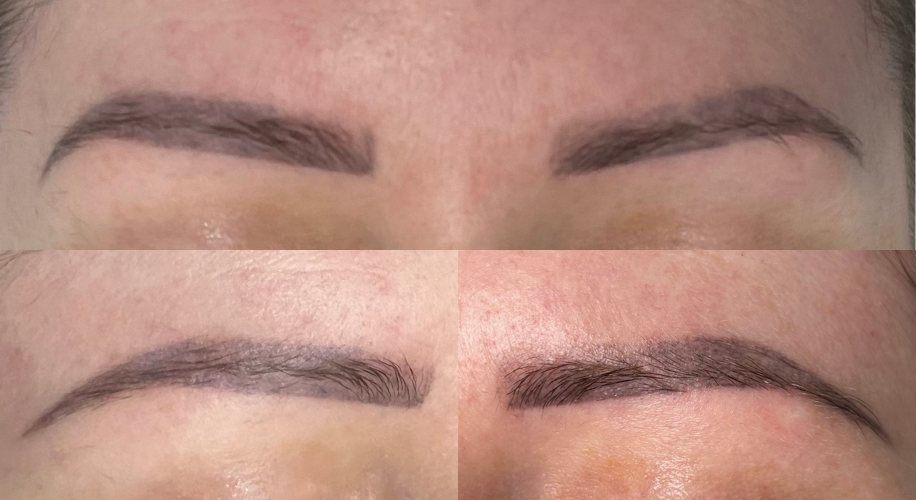
Before
Session one: removing the darker pigment
For the first session, my priority was the dark, cool-toned pigment.
I used the 1064 nm wavelength on my Cynosure Revlite SI, beginning with a test patch before proceeding with treatment.
There was an immediate reduction in much of the cool-toned appearance.
But underneath it was something quite different.
Red.
This is something I explain to clients before beginning cosmetic tattoo removal.
The laser hasn't necessarily "turned the tattoo red."
Instead, removing or reducing the darker component of a mixed pigment can make warmer components that were already present much more visible.
Some deeper areas of cool pigment remained, so rather than trying to aggressively remove everything in one treatment, we allowed the brows to heal and reassessed them later.
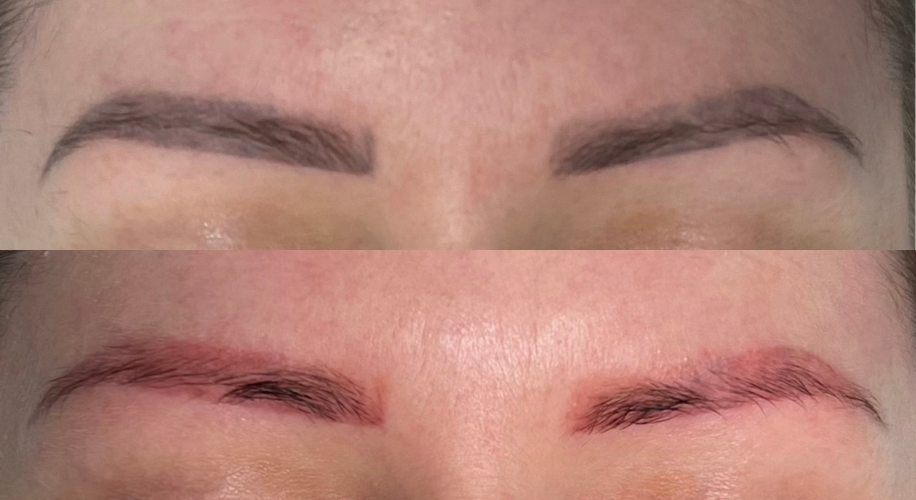
Before 1st Session & After 1st Session
Session two: now we had a different target
By the second treatment, the brows looked very different from where we started.
The dominant visible colour was now red, so the treatment needed to change too.
Different pigment colours absorb different wavelengths of light. This means cosmetic tattoo removal isn't necessarily a matter of repeatedly using the same laser settings at every appointment.
For the second session, I used the 532 nm wavelength to target the visible red pigment.
There wasn't a dramatic instant disappearance of the red.
That doesn't mean the treatment hadn't worked.
Laser tattoo removal fragments pigment particles, and much of the subsequent change occurs gradually as the body processes that fragmented material over the following weeks and months.
Once again, we waited.
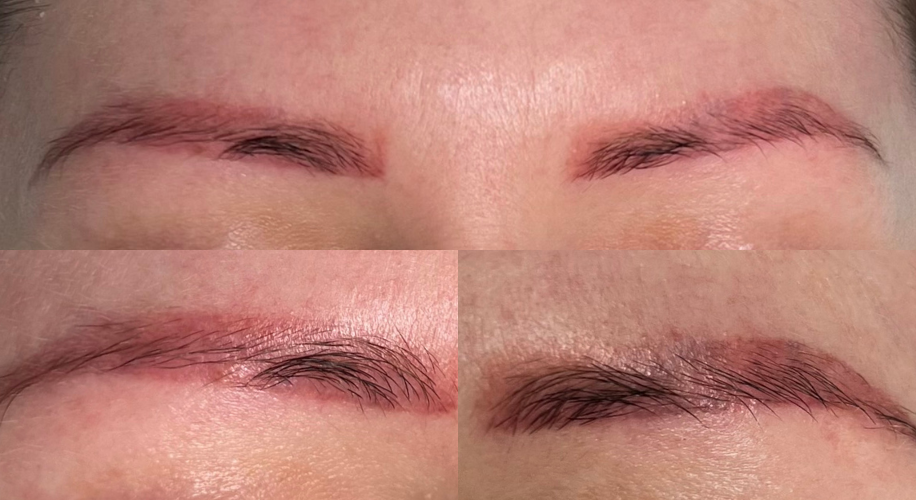
After 1st Session
After session two: another colour appeared
As the red faded, the brows changed again.
Most of the red pigment had reduced significantly. Some deeper cool pigment remained, but we could now also see a subtle yellow tone.
This is one of the reasons I am cautious about promising "complete removal" of cosmetic tattoos.
Yellow pigments can be difficult and unpredictable laser targets. The decision to continue treating them needs to consider how visible the remaining pigment actually is, how it responds to treatment and whether further intervention is justified.
The objective isn't to keep applying more laser simply because a trace of pigment remains.
The objective is to achieve the client's goal while minimising unnecessary treatment to the skin.
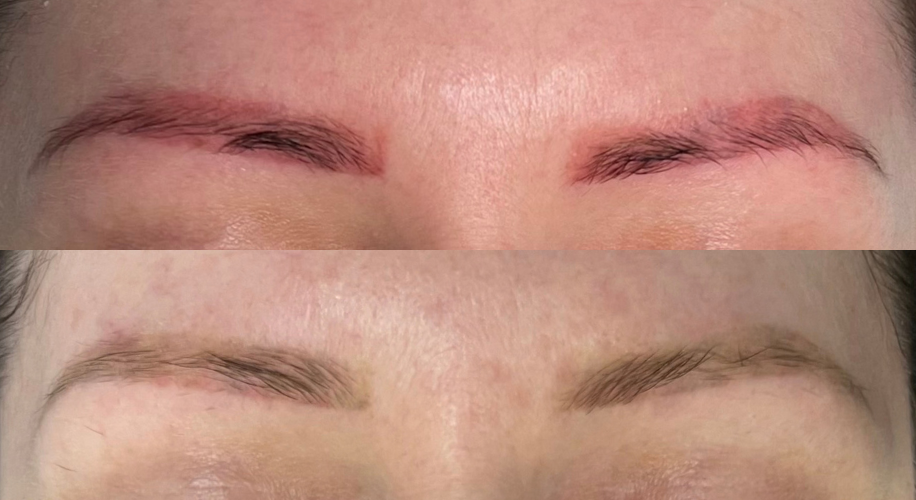
Before 2nd Session & After 2nd Session
Session three: treating what remained
At the third session, we reassessed the brows rather than simply repeating the previous treatment.
There were still small amounts of darker and warmer pigment present.
I treated the remaining appropriate targets using 1064 nm and 532 nm wavelengths.
Again, we allowed the brows time to heal and fade.
By the time we reviewed the result, the majority of the original dark and red pigment had gone. A very subtle yellow tone remained in areas, but the overall tattoo was dramatically lighter.
Most importantly, my client was happy with the result and decided she didn't want further removal.
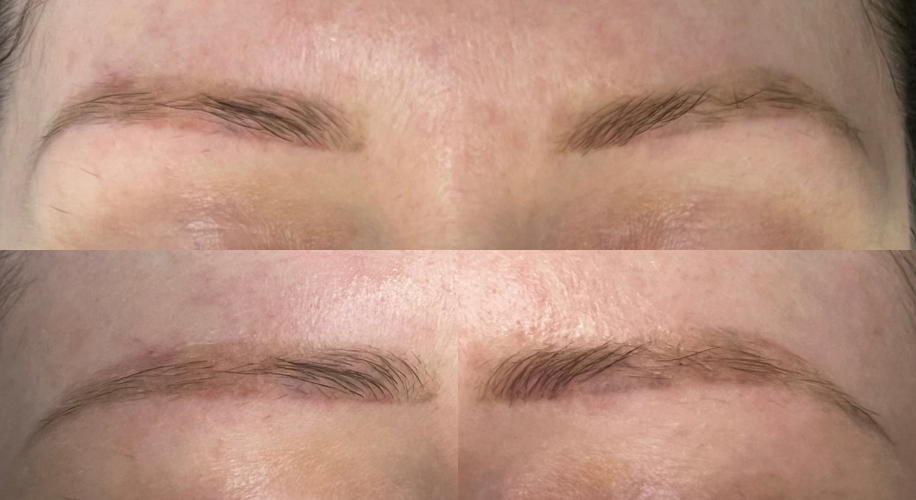
After 2nd Session
Does "full removal" always mean every trace of pigment disappears?
Not necessarily.
When clients tell me they want full removal, I interpret that as their treatment goal. It isn't a guarantee that every pigment particle can be removed completely.
There are several factors that can affect the final result, including:
the pigments used
how deeply and densely they were implanted
how many times the brows have been tattooed
previous removal treatments
the colours present in the pigment formulation
the individual's response to treatment
how the remaining pigment responds as different components are removed
Some cosmetic tattoo pigments are considerably more challenging than others.
There is also a point where the question changes from "Can we treat this again?" to "Is there enough visible pigment left to justify another treatment?"
Those aren't always the same thing.
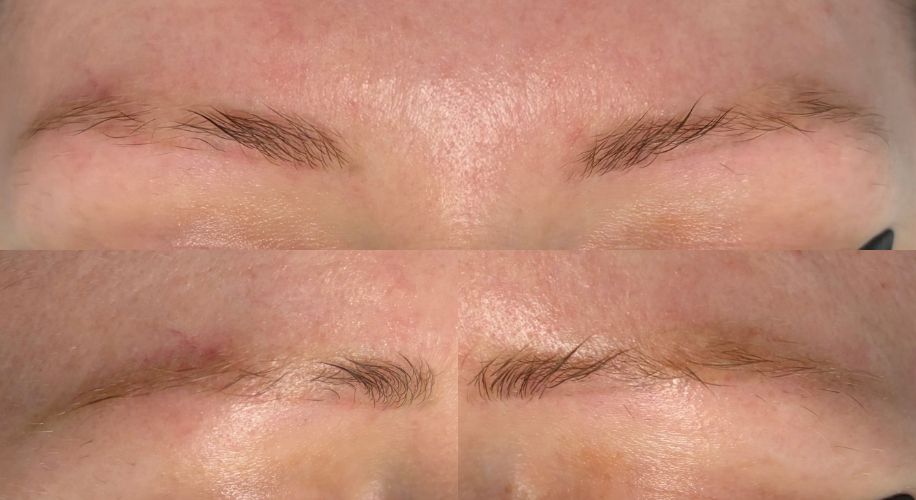
Final result
Why brow tattoo removal can go through some strange colours
This case demonstrates something important.
The colour you see before treatment doesn't necessarily tell you everything that is sitting in the skin.
These brows effectively progressed through:
cool/ashy → red → subtle yellow → very faint residual pigment
That doesn't mean the laser created each new colour.
Instead, we progressively changed which components of the original pigment blend were most visible.
This is why someone else's brow removal journey cannot reliably predict yours.
Two people can walk into the clinic with very similar-looking grey brows and have completely different pigment compositions underneath.
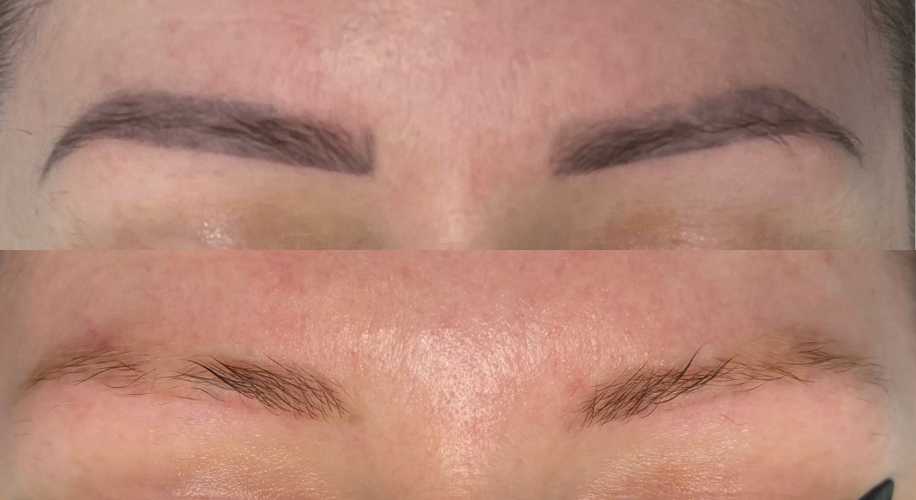
Before & After
Why I assess brow removal one session at a time
I don't believe cosmetic tattoo removal should be approached as a predetermined number of identical laser sessions.
After each treatment, I want to see what the pigment does.
Which colour disappeared?
What has become visible underneath?
Is there still an appropriate laser target?
Has the client already achieved enough lightening for their goal?
Does the next pigment require a different wavelength or potentially a different removal method altogether?
Sometimes the best decision is another laser session.
Sometimes it is allowing considerably more time for fading.
Sometimes another removal modality may need to be considered.
And sometimes the right decision is to stop because the client is already happy.
What this case teaches us
Brow tattoo removal can be extremely effective, but cosmetic pigments require a more nuanced approach than simply turning the laser up and repeatedly treating what appears to be the same tattoo.
Different colours can require different wavelengths. Hidden colours can become visible during the process. Some pigments respond readily, while others may be resistant or unsuitable for continued laser treatment.
There can also be an awkward stage between the brows you started with and the result you're trying to achieve.
That is normal.
For this client, three carefully planned laser sessions produced enough removal that she was happy to stop.
That, rather than chasing an artificial definition of "100% removal", was our endpoint.
Considering brow tattoo removal in Brisbane?
Before starting treatment, I assess the current colour and saturation of the brows, tattoo and removal history, skin, visible pigment characteristics and what the client actually wants to achieve.
The goal might be significant lightening before having new brows tattooed, correction of part of the existing shape, or removal of as much of the old tattoo as reasonably possible.
From there, we can determine an appropriate treatment plan and reassess it as the pigment responds.
