
Lip Tattoo Removal Brisbane
Specialist Lip Tattoo Removal in Everton Park, Brisbane
Emma provides specialist removal and lightening of lip blush and cosmetic lip tattoos from her Everton Park clinic.
Treatment may be considered where pigment has healed too bright, too dark, unevenly, outside the natural lip border or no longer suits the client’s intended result.
The appropriate method may involve laser removal, non-laser removal or a staged approach. Treatment suitability depends on the pigment colour, saturation, placement, previous treatments, skin condition, cold-sore history and whether the goal is correction, lightening or complete removal.

How Lip Tattoo Removal Is Planned
Lip tattoo removal requires careful assessment because cosmetic lip pigments can contain multiple colours and may respond differently during treatment.
The recommended approach depends on:
The colour currently visible in the lips
Pigment saturation and placement
Whether pigment extends beyond the natural lip border
Previous tattooing or removal treatments
Skin and lip condition
History of cold sores
The client’s goal of correction, lightening or complete removal
Laser removal may be suitable for some pigments. Non-laser removal may be recommended where laser is unsuitable or where remaining pigment requires another approach.
Some clients require staged treatment using more than one method. The treatment pathway may change as different pigment colours become visible and the lips heal between sessions.

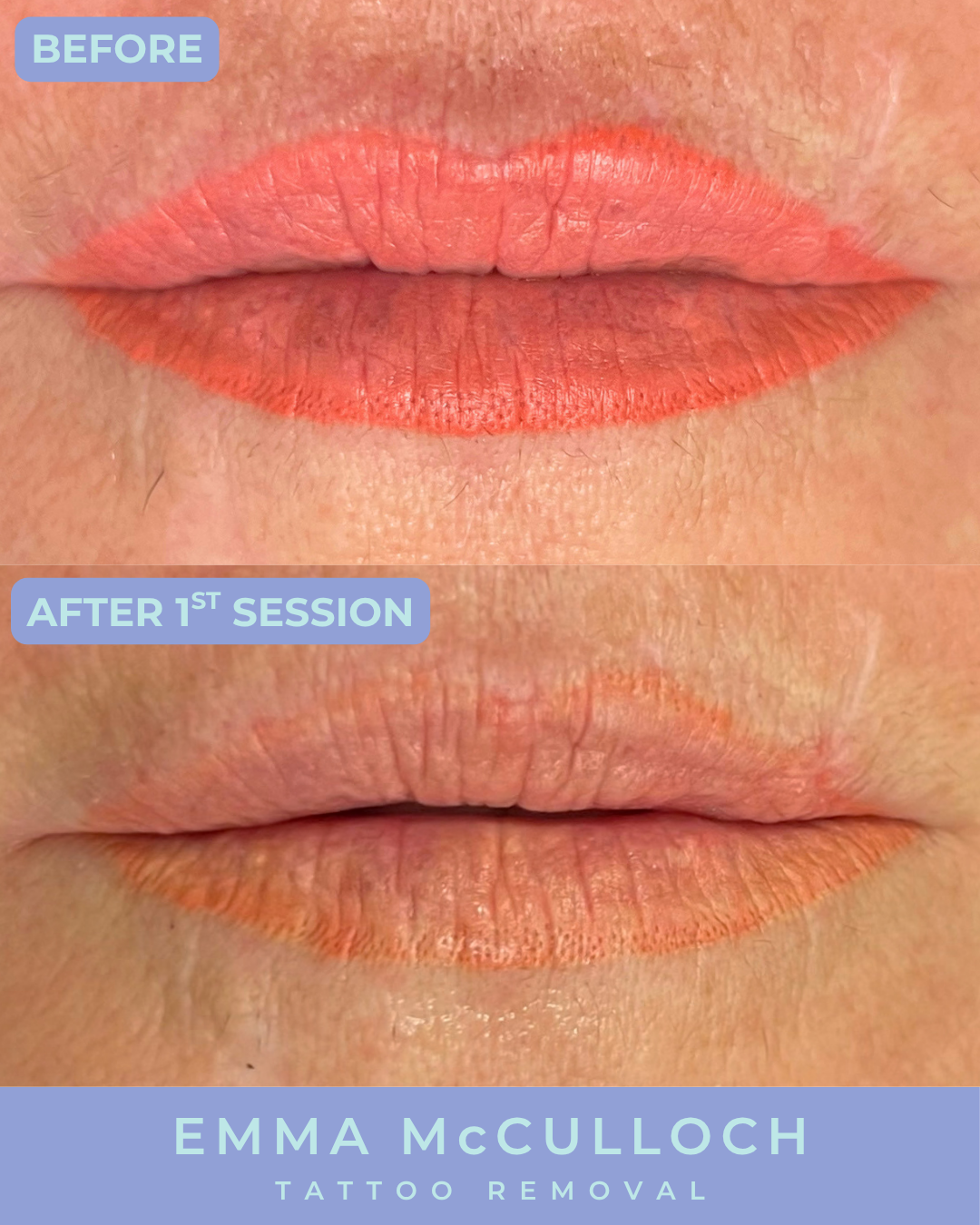
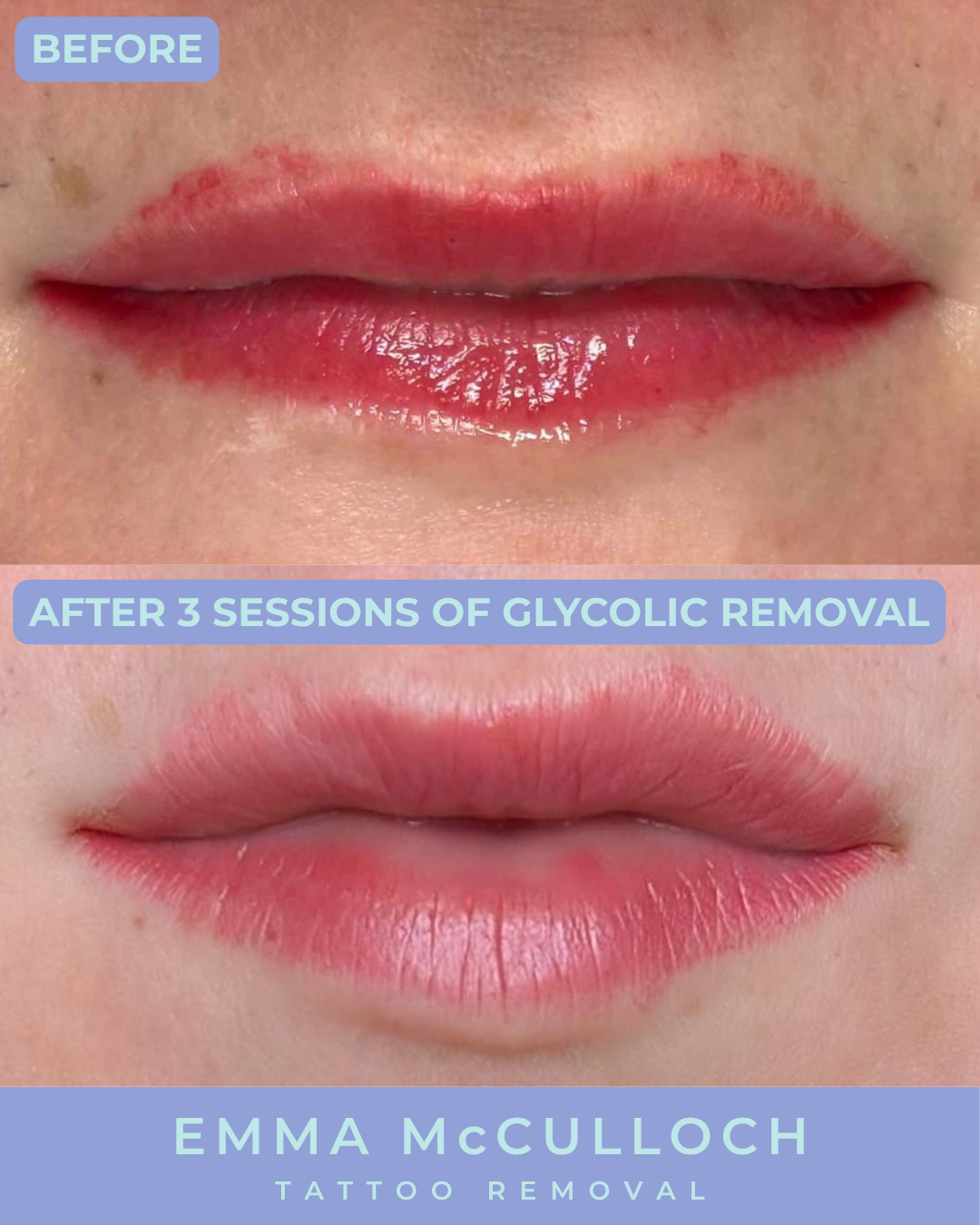
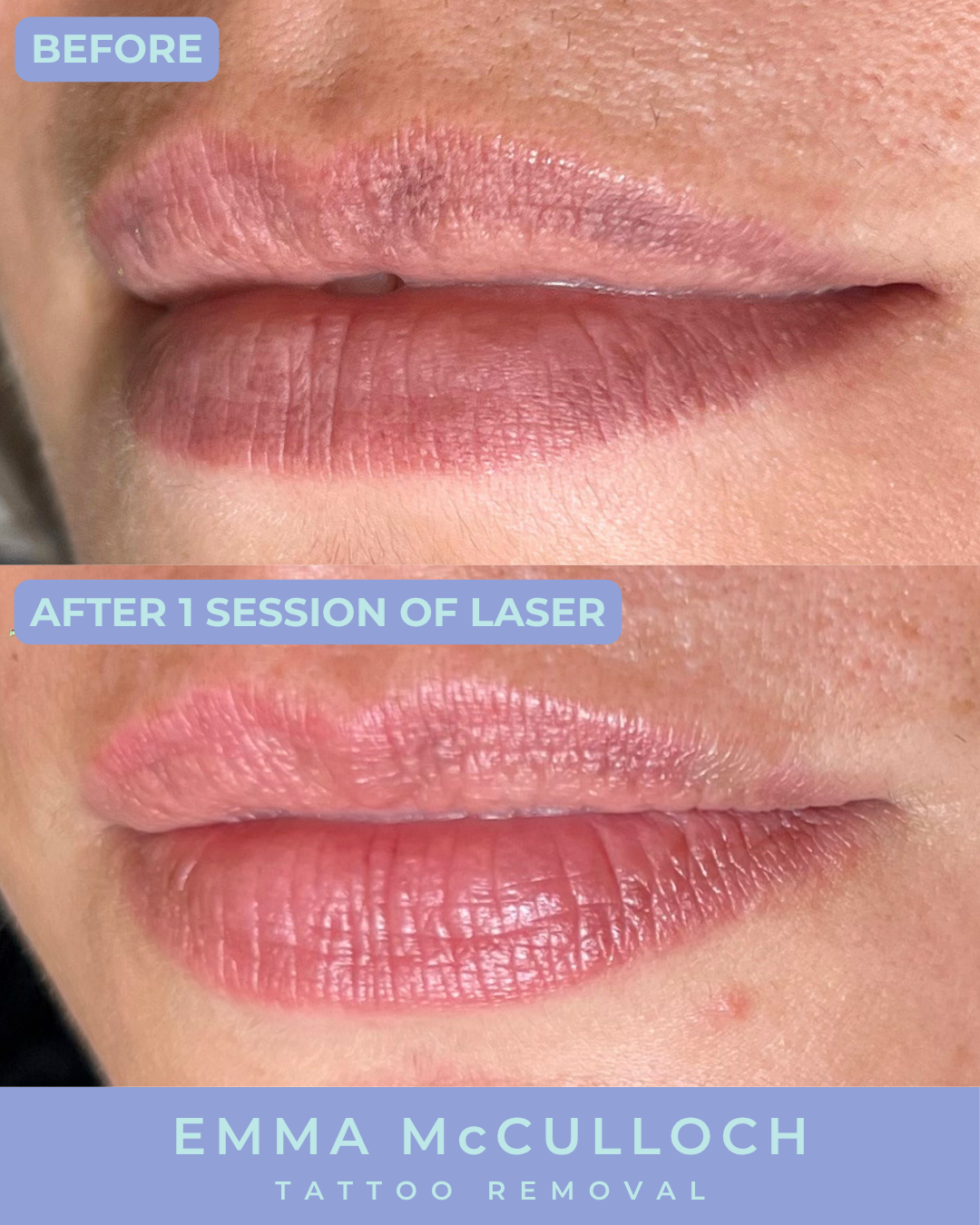
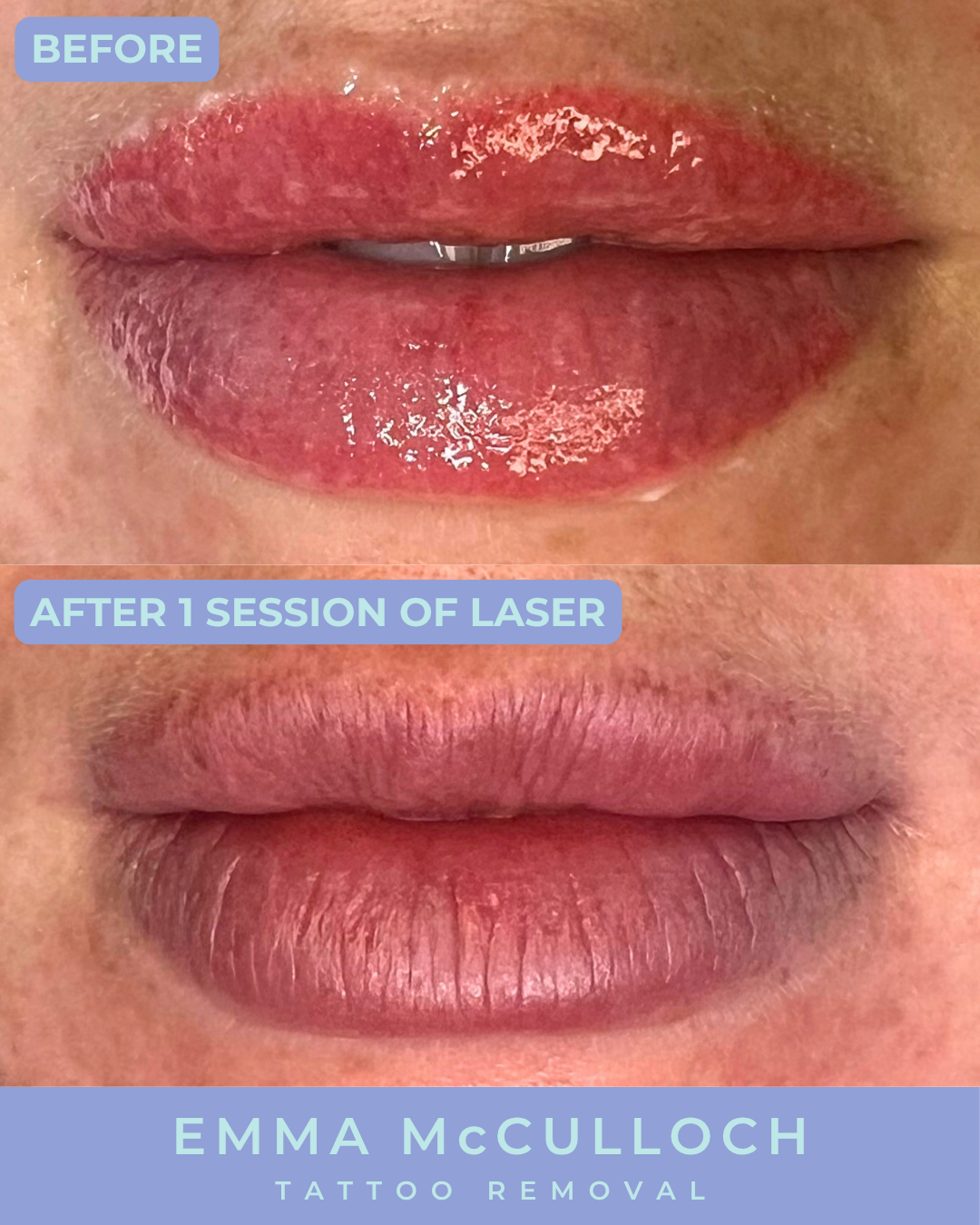
Common Reasons Clients Seek Lip Tattoo Removal
Clients seek lip tattoo removal for many different reasons, including colour that has healed too bright, too dark, too cool, unevenly or outside the natural lip border. Others want to soften an old lip blush, reduce definition, correct unwanted tones or create a better base for future tattooing. Treatment is planned around what is visible in the skin now and whether the goal is lightening, correction or full removal.

FAQs
-
The number of sessions varies from person to person. It depends on the pigment used, how saturated the colour is, how deep it sits in the skin, how your lips have healed, and whether the goal is full removal or lightening. Some clients need only a small amount of lightening, while others need a longer treatment plan.
-
Treatment intervals depend on the method used, the condition of the lips and how the area heals. Adequate healing time is required between laser and non-laser treatments.
The interval may be extended if the lips remain dry, inflamed, sensitive or otherwise not ready for further treatment. Timing is reviewed individually before each session.
-
Lip tattoo removal can be uncomfortable because the lips are sensitive, but treatments are very quick. Cooling and a careful technique help make the process more manageable. If appropriate, numbing options can also be discussed before treatment.
-
Any tattoo removal method carries some risk of scarring, texture change, pigment change or alteration to the treated border. Risk is reduced through appropriate treatment selection, conservative technique, adequate healing intervals and correct aftercare, but it cannot be eliminated completely.
Temporary swelling, tenderness, dryness, flaking and uneven colour may occur during healing. Individual risks will be discussed before treatment.
-
No. The appropriate method depends on the pigment colour, saturation, placement, previous treatments, lip condition and intended outcome.
Treatment may involve laser removal, non-laser removal or a staged approach using more than one method. The recommended pathway may change as different pigment colours become visible during removal.
-
Yes. Some clients do not want full removal. They may only want to soften the colour, reduce a border, fade uneven areas, or create a better base for future lip blush work. Your treatment plan can be tailored to controlled lightening rather than full removal.
-
These are common reasons people seek lip tattoo removal. Treatment can be planned to target unwanted colour, soften oversaturation, reduce asymmetry, or improve pigment that has healed outside the desired shape. The exact approach depends on what is present in the skin now and what result you are trying to achieve.
-
Your lips, pigment, skin, treatment history and goals are assessed first. From there, the safest and most suitable method is recommended, along with realistic expectations, likely treatment spacing, aftercare requirements and the next step.
-
Downtime depends on the method used. Temporary redness, swelling, tenderness, dryness and flaking are common. Some methods can involve more visible healing than others. You will be given method-specific aftercare and advice on what is normal during recovery.
-
Treatment itself is usually quite quick, but your appointment also includes assessment, photos, treatment planning and aftercare instructions. The total appointment time depends on whether it is your first visit, a review, or an ongoing treatment session.
-
Any treatment around the lips can trigger a cold sore outbreak in people with a history of HSV-1. Let me know before treatment if you have ever had cold sores. If you have an active lesion or warning signs such as tingling, burning or tenderness, treatment should be postponed until the area is fully healed. In some cases, a pharmacist or your doctor may recommend preventative antiviral medication before treatment.
Why Clients Choose Emma for Lip Tattoo Removal
Emma McCulloch is a tattoo removal specialist in Everton Park, Brisbane, with a background as a former cosmetic tattooist. Her understanding of cosmetic pigment, colour shifts, healed results and skin response helps guide a more personalised treatment plan for lip tattoo removal. Every treatment is approached conservatively, with careful method selection based on the pigment, the lips, and the end goal.
